I’ve been on a quest to find a realistic ballast for my layout, and after much head scratching and a trip trackside to actually measure real ballast, I think I’ve found a perfect solution.
But before I reveal my great find, you may be asking, who in their right mind walks trackside with a tape measure in hand to record different sizes of rock? This hobby is not without it’s absurdities! I know real ballast comes in many different colors, sizes, and hardness grades, so I wanted to see what the local branch line close to my home showed. What I found was that the rocks averaged between 1.5 and 3-inches in length with a minority in the 4-inch range. Armed with that information, I started to search for a material that would work but not “break the bank” in cost.
After several AI searches and strikeouts, I became intrigued by one of the surprising options—chicken grit. Chicken grit is the material that the birds use to digest their food. They swallow tiny bits of lockable rock, and it acts as a grinding agent in their gizzards to break down what they eat. I found out that it comes in a couple different sizes to cover the full lifespan of the birds. Number 1 grade is suitable for chicks, so that is what I set my sights on.
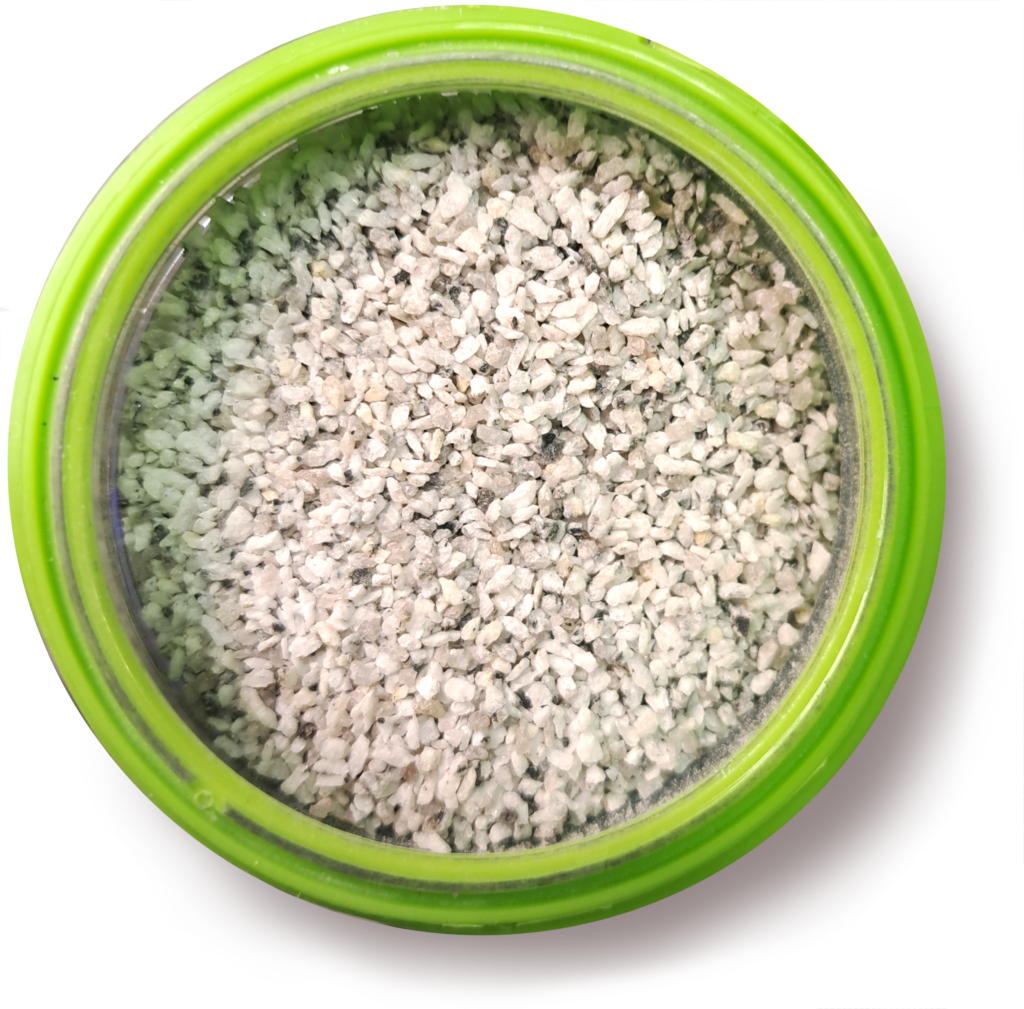
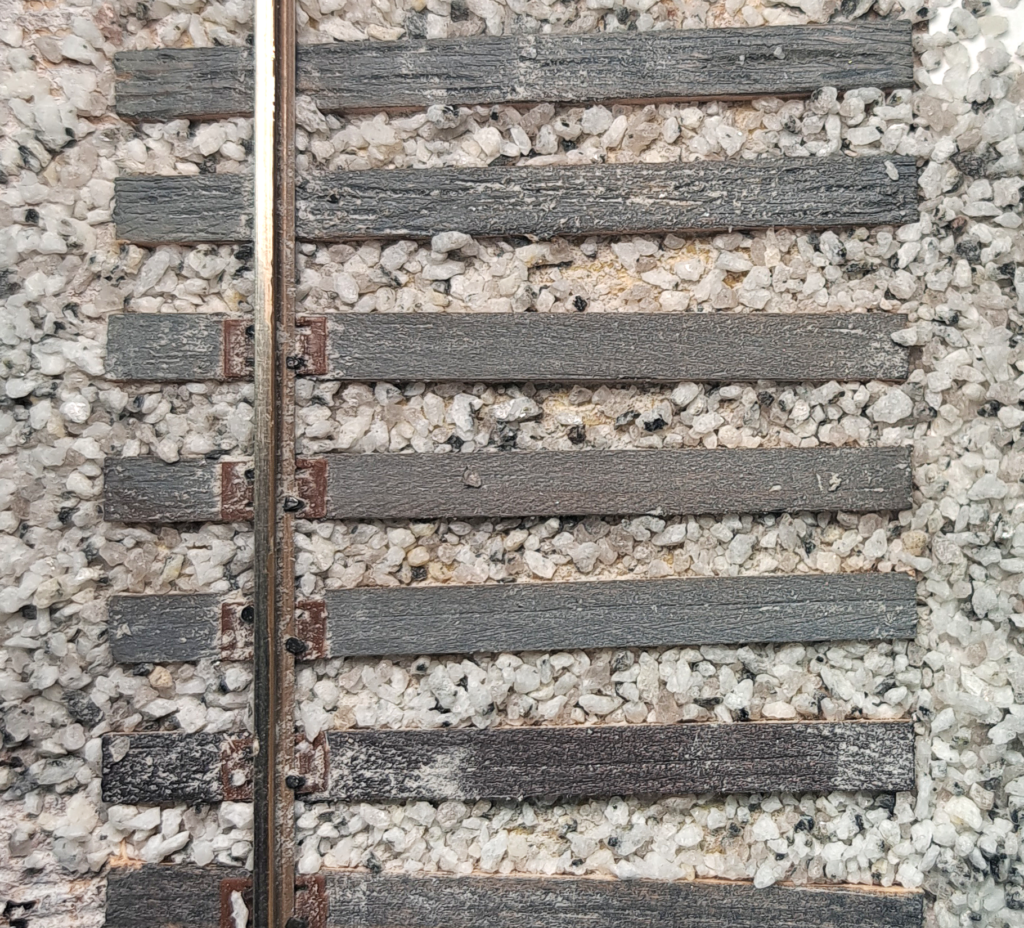
There were a number of options to purchase Number 1 grade grit. If one buys it pre-packaged, it can be more expensive than buying in bulk from a local animal feed store. When I checked at my favorite local store, I was pleased to find out it cost $0.30 per pound. What a great deal! And, here’s the most important part: the grit is crushed quartz that has a very nice white/grayish look, perfect for what I needed.
The Number 1 grade was very close to the prototypical sizes that I measured, but it had a little too much of the scale 4-inch lengths. This was easily remedied by a trip to the local dollar store to pick up a cheap drain screen with gaps in the 1.5-3-inch scale size that I needed. I sift the rock through the screen into some small containers and I’ll keep the slightly larger bits for other scenic purposes.
I’m very happy with my discovery. Not only is the quartz sized correctly after screening, but it looks good as well. I plan to use it in its current form, but I’m sure if someone experimented with staining the rock they could come up with many different color options.
Chicken grit. Who would’ve thought?